WHAT IS VIOLENCE?
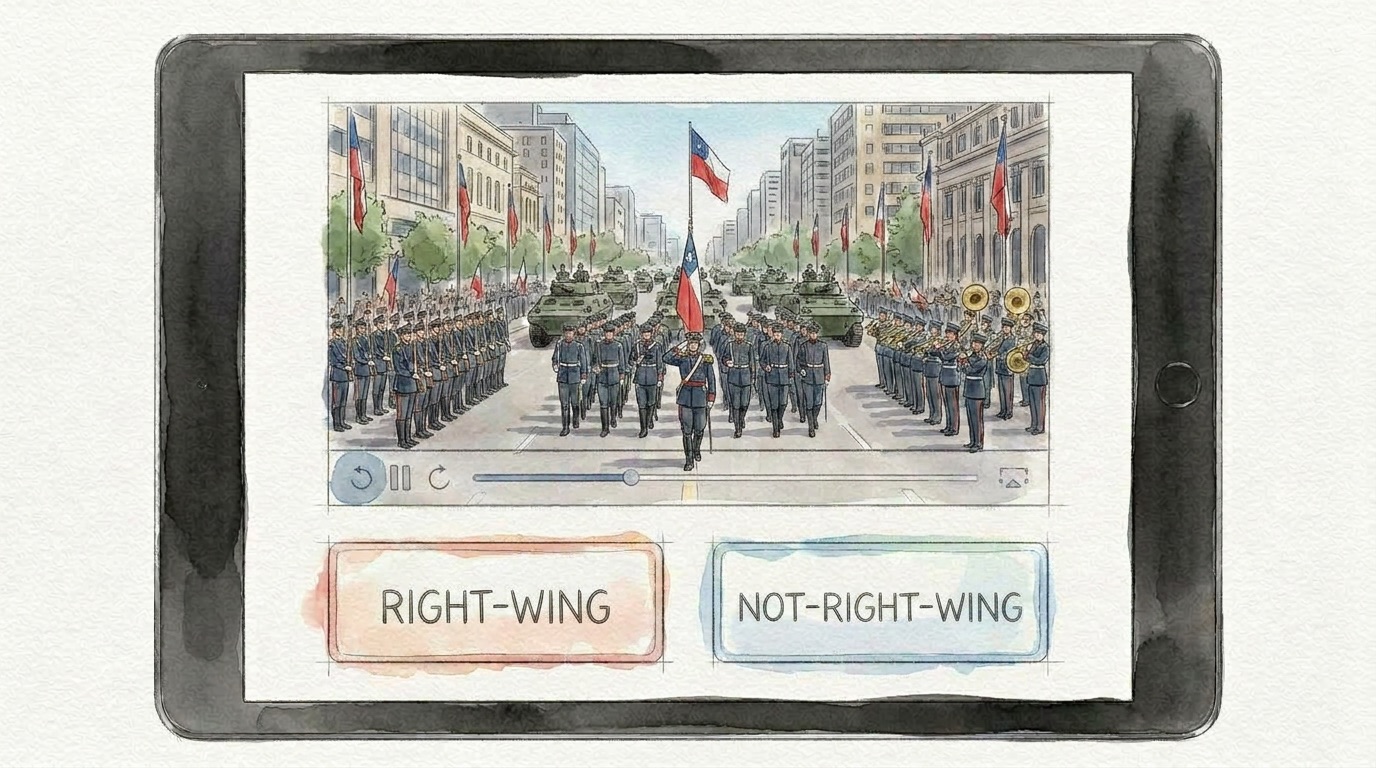
A military parade? A five-year-old beauty queen? A cleaning lady dusting a priceless painting in an elegant house she will never own? Violence is never only in the image — it is in the eye the media has trained. Visitors judge one-minute scenes from a fifteen-year documentary archive of Chilean life; their responses feed an algorithmic montage that endlessly re-edits the answer across two opposing screens — a cybernetic mirage of a country, assembled from its own judgements.
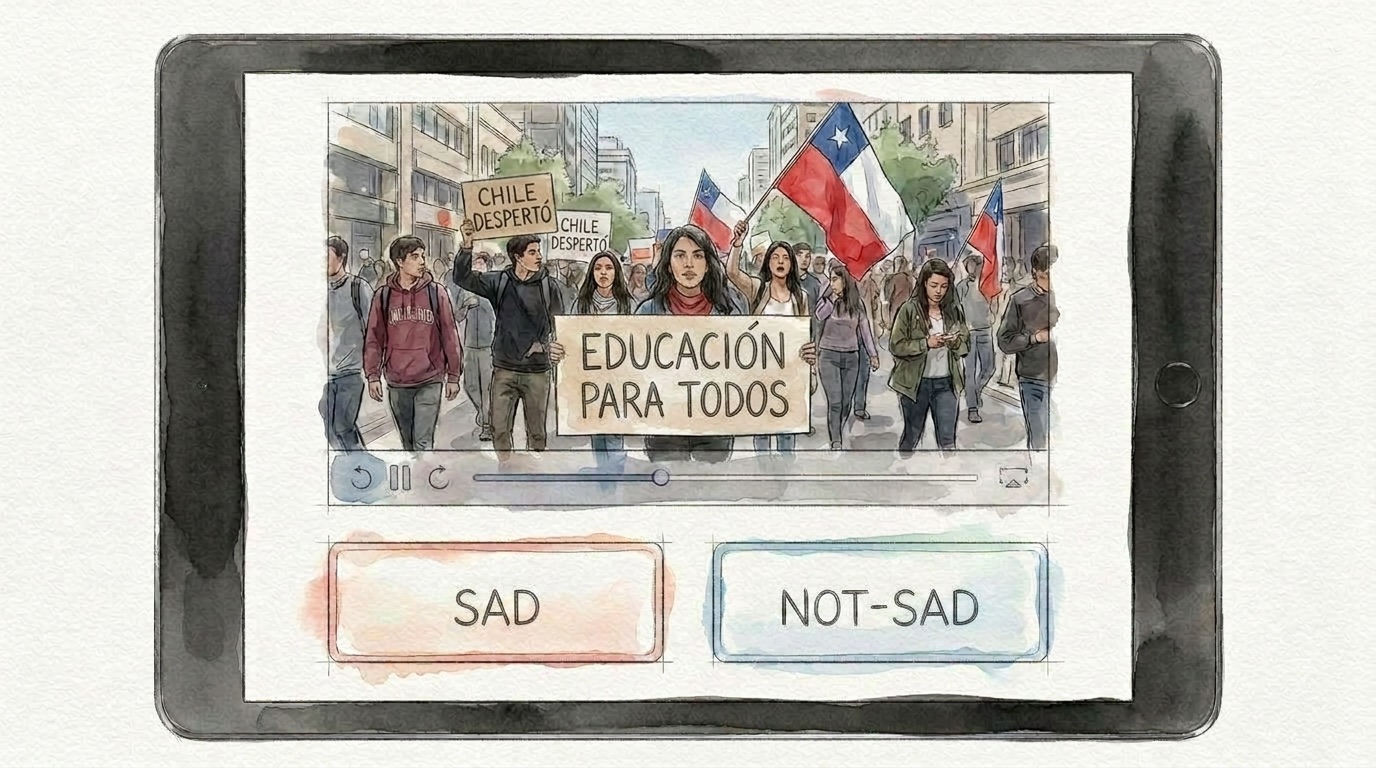
Watch a few of the fragments below. One minute each, no commentary, no context. A first encounter with the question this whole project turns on.
FROM THE MAFI ARCHIVE · MAPA FÍLMICO DE UN PAÍS · 2010–2024
Is this violent?
A COUNTRY DIVIDED
In Chile, the question of violence divided a country. For years the debate was about structural violence — extractivism, labour exploitation, economic abuse. Then, in 2019, it became direct: in the streets, in the protests, in the repression. Legitimised by some, condemned by others. And it is not only a Chilean question — everywhere, violences of many kinds now reach power and dominate the public conversation. What each of us calls violence was learned somewhere — from the news, the feed, the frame that arrived before the event did.
For fifteen years, the MAFI collective documented that history: over 300 one-minute, fixed-frame, direct-sound films, from mass protest to intimate ritual, from the megacity to the desert. In 2025 the archive was donated to Chile's Cineteca Nacional.
Mirage returns to it — from the inside, because we filmed it, and from the outside, asking what else it can become.
A mirage is not a lie: it is what heat and distance do to something genuinely there, and the desert in these films is full of them. A country reading itself through its own archive works the same way — what is seen is really there, moving as the spectator approaches.
A sample of the more than 300 films in the MAFI collection. The films on this site are from MAFI's first period; alongside material from its collaborative workshops and its feature documentaries — Propaganda (2014), Dios (2019), and Oasis (2024) — they will form the wider archive Mirage draws from.
TWO SCREENS, ONE QUESTION
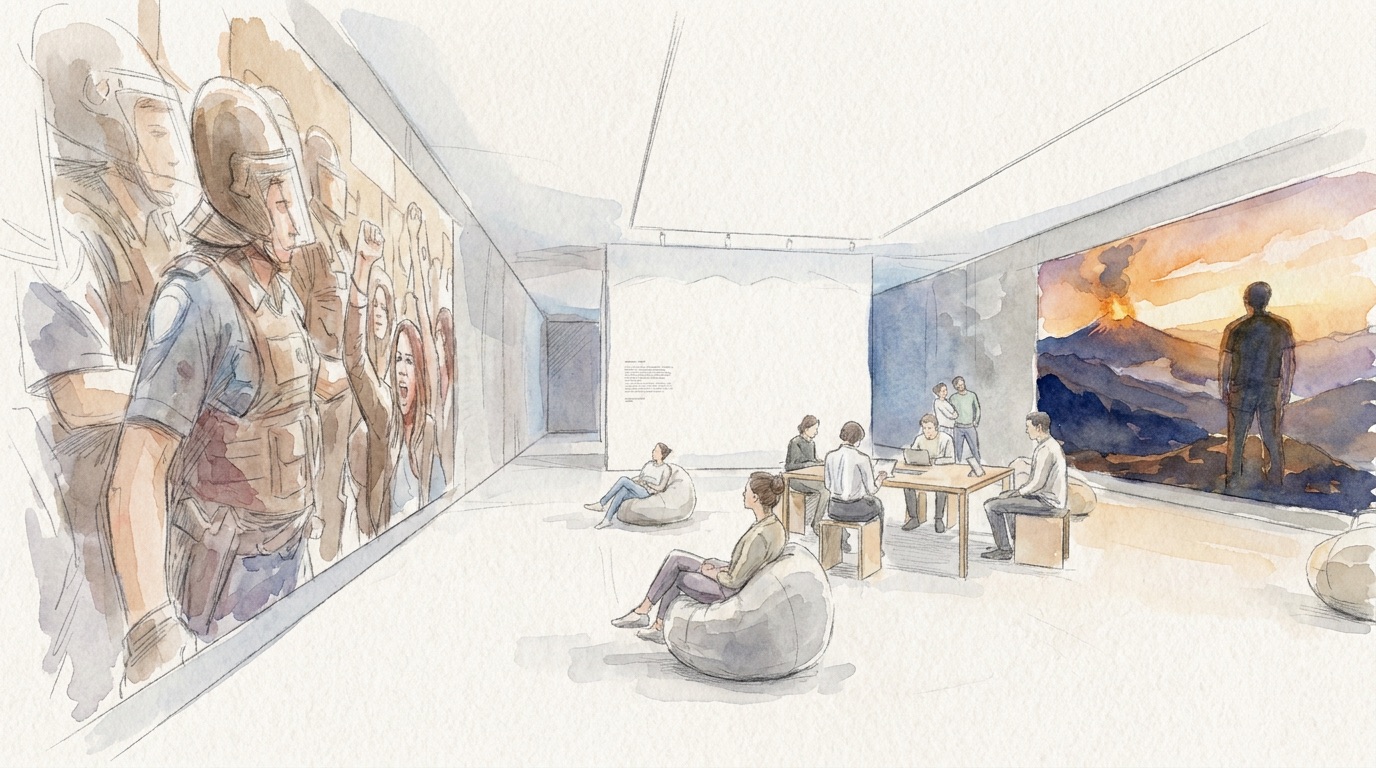
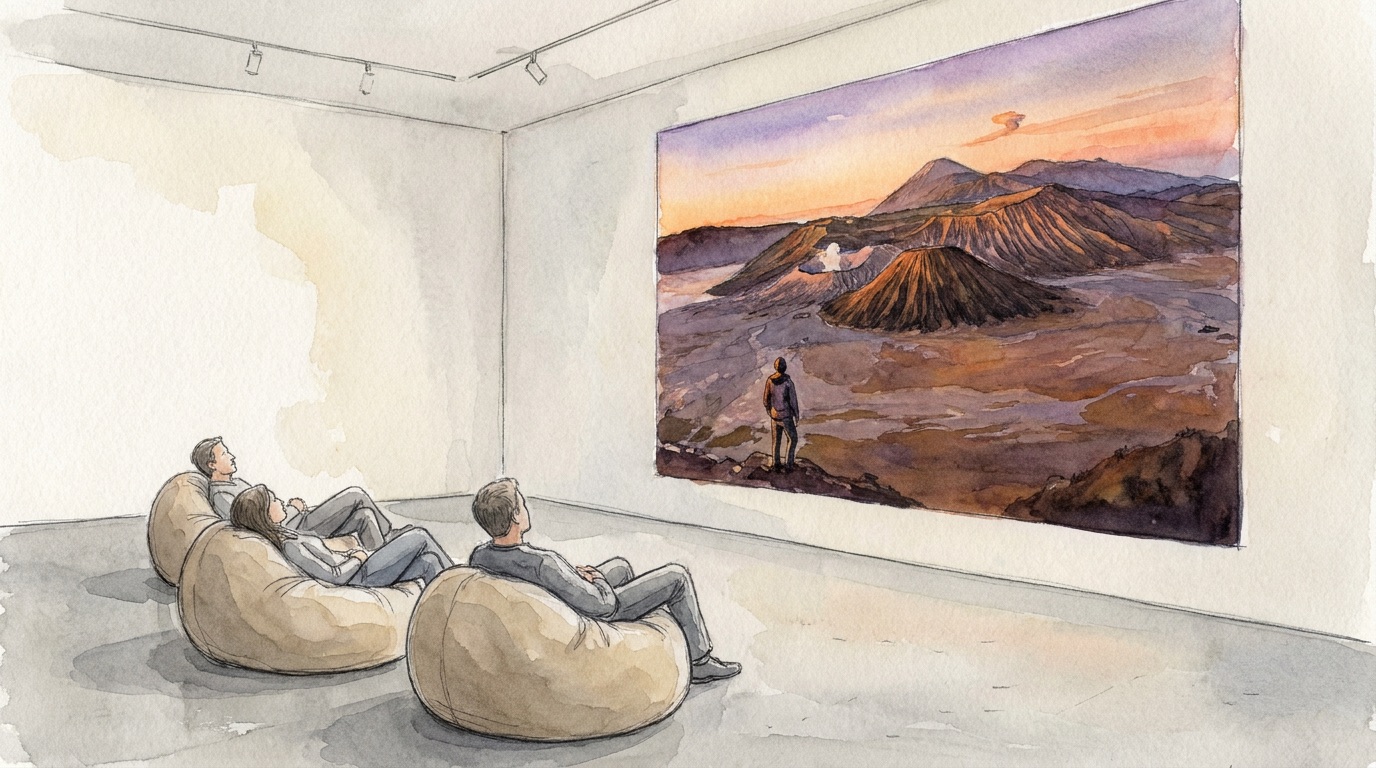
Mirage invites visitors into a room where two screens face each other in an endless loop. Between them, annotation stations turn every answer into a new edit.
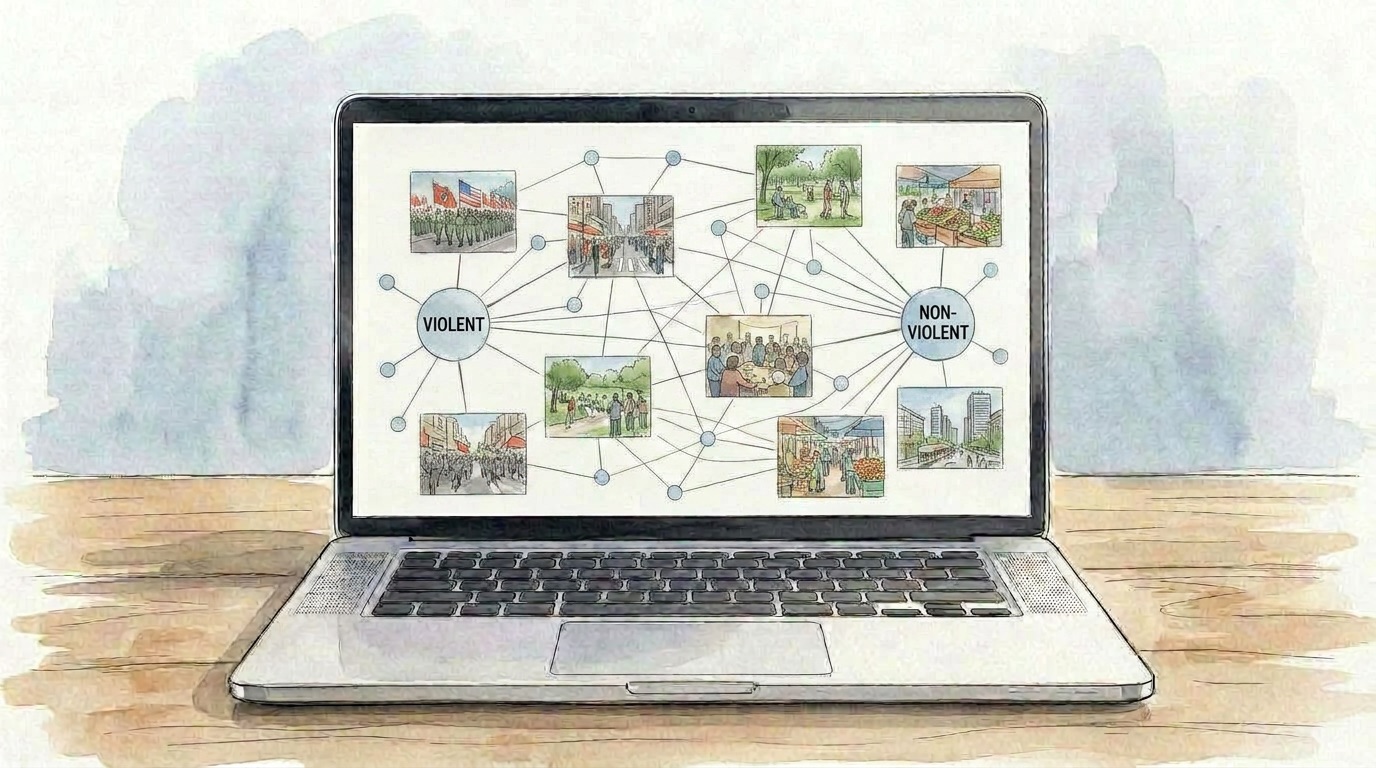
Two screens play fragments from the archive in an endless loop. One shows what visitors have judged violent; the other holds what they have judged non-violent. Watching these feeds, the visitor becomes a spectator of an endless stream of documentary cinema.
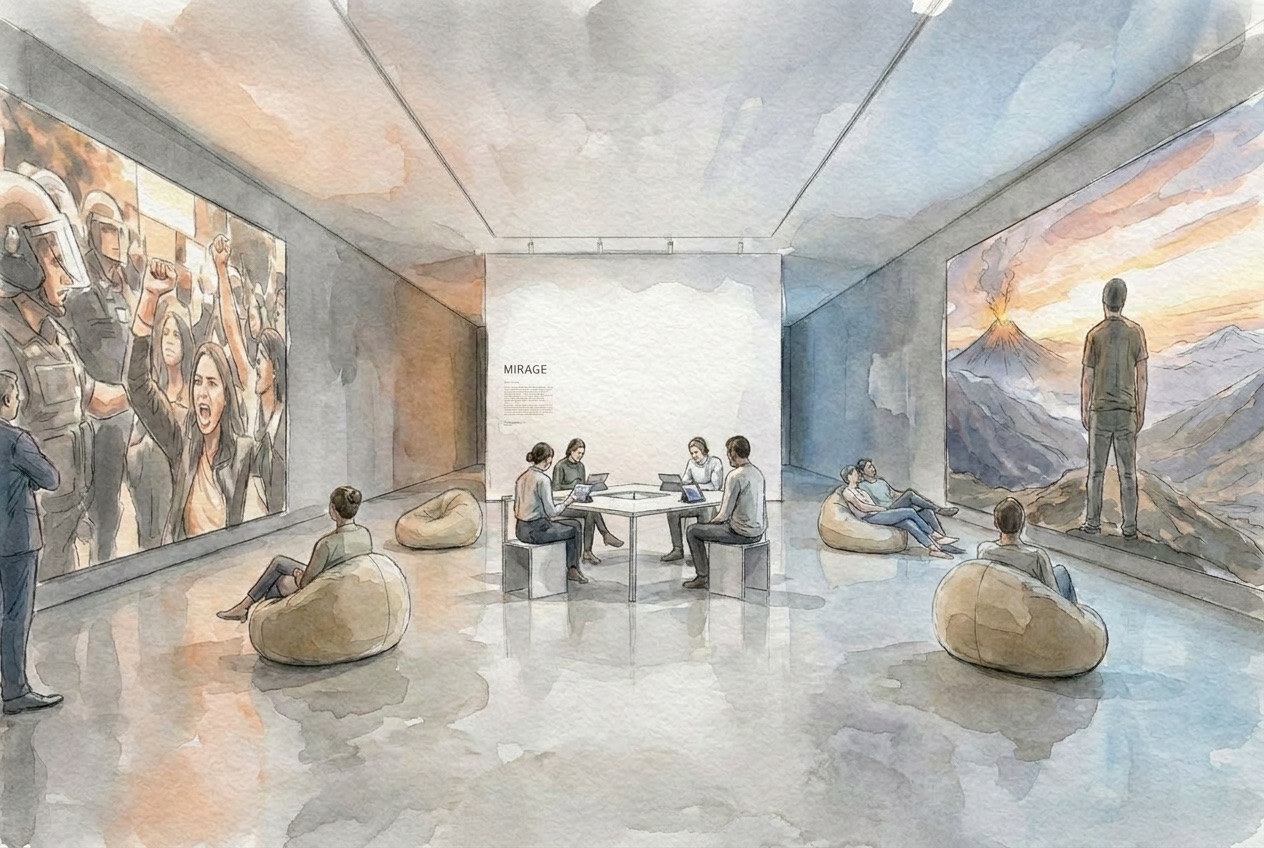
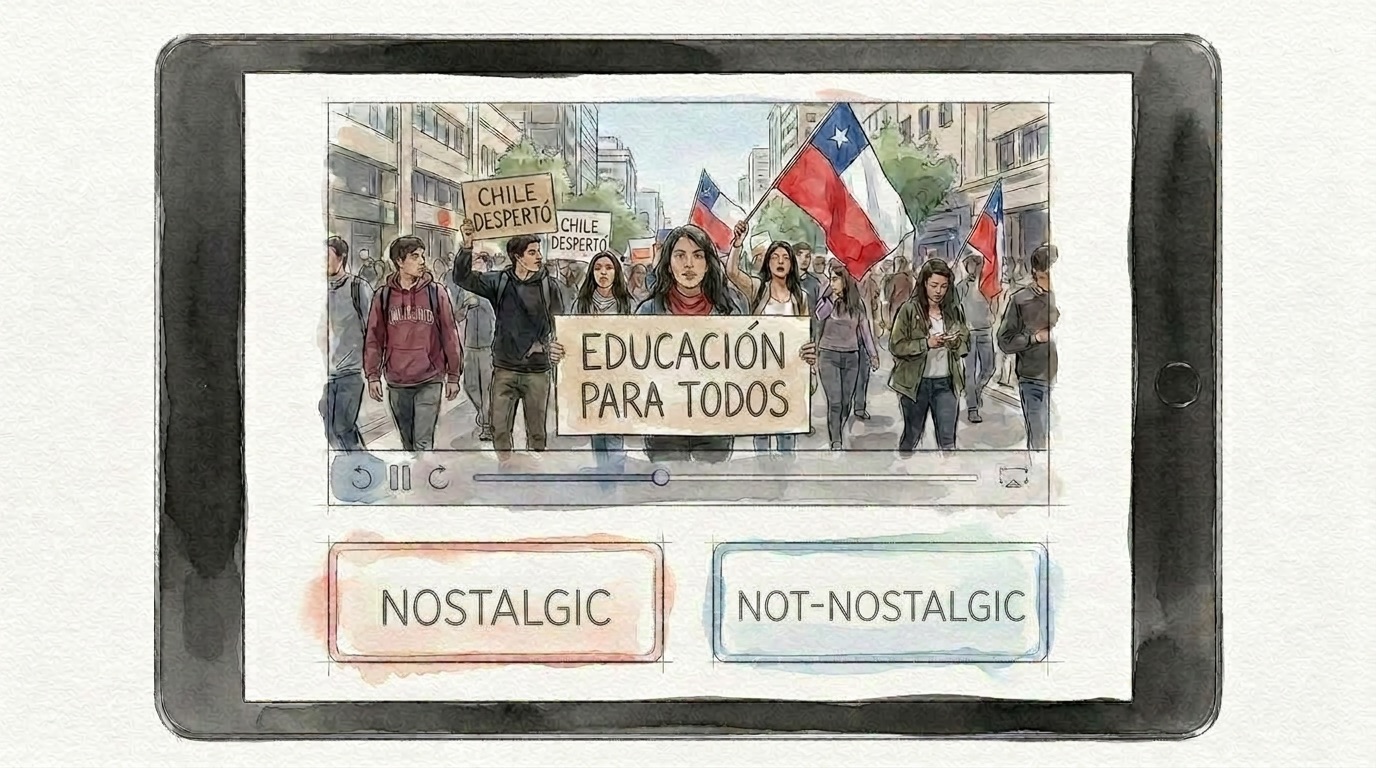
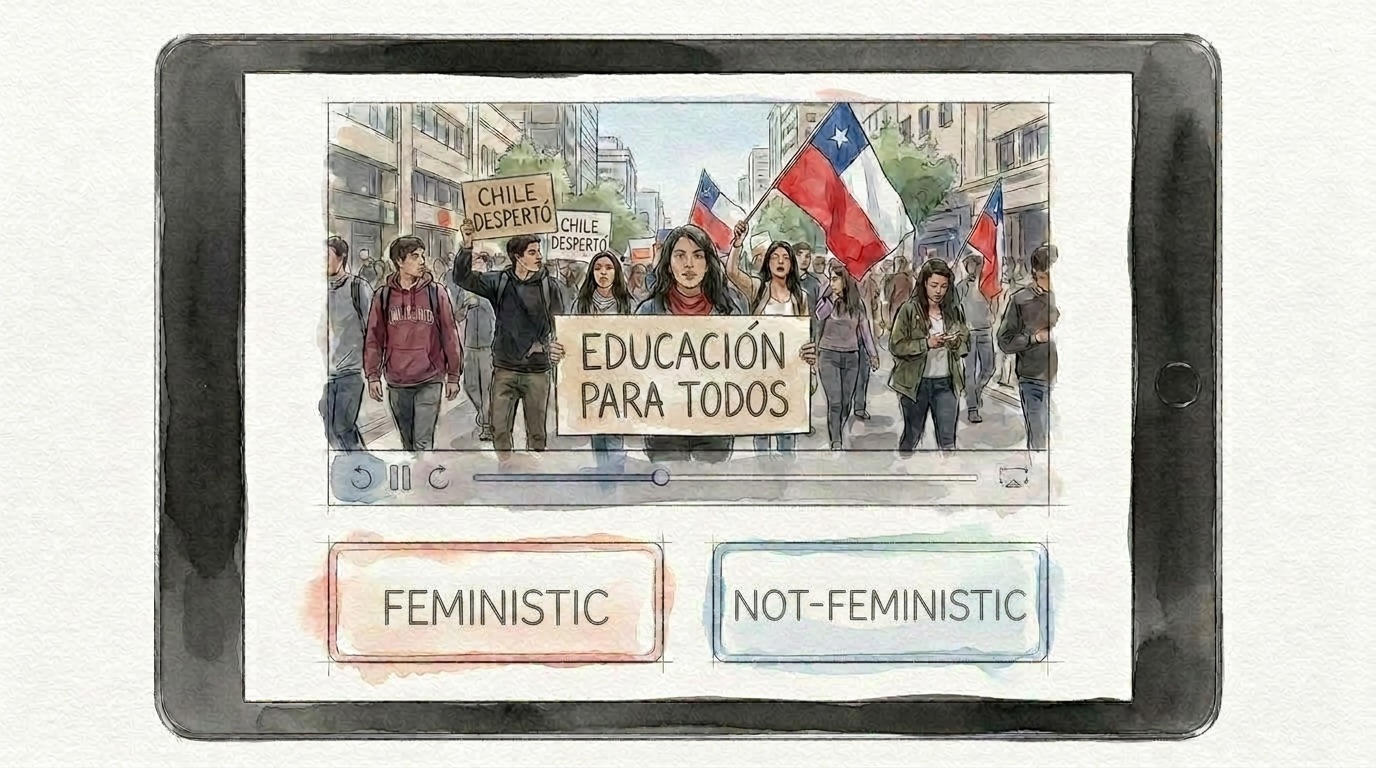
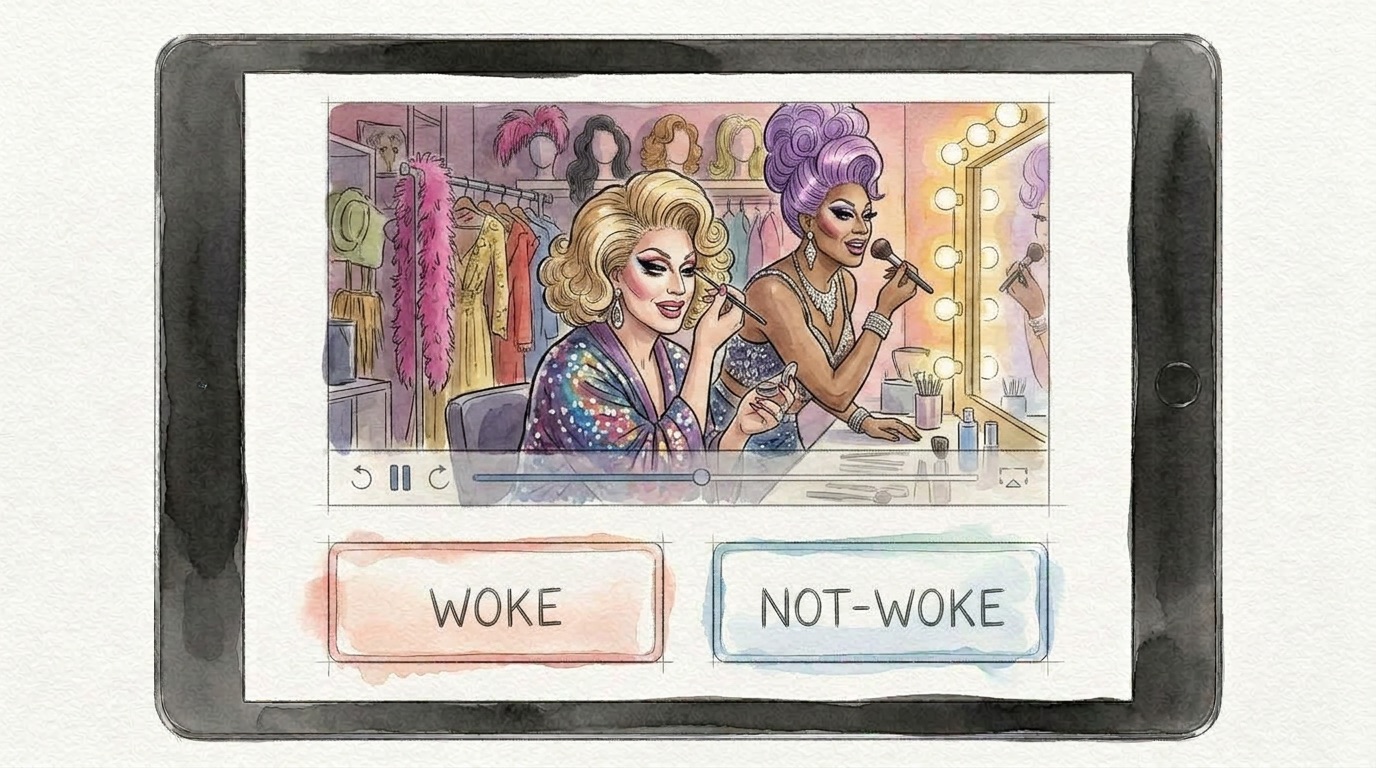
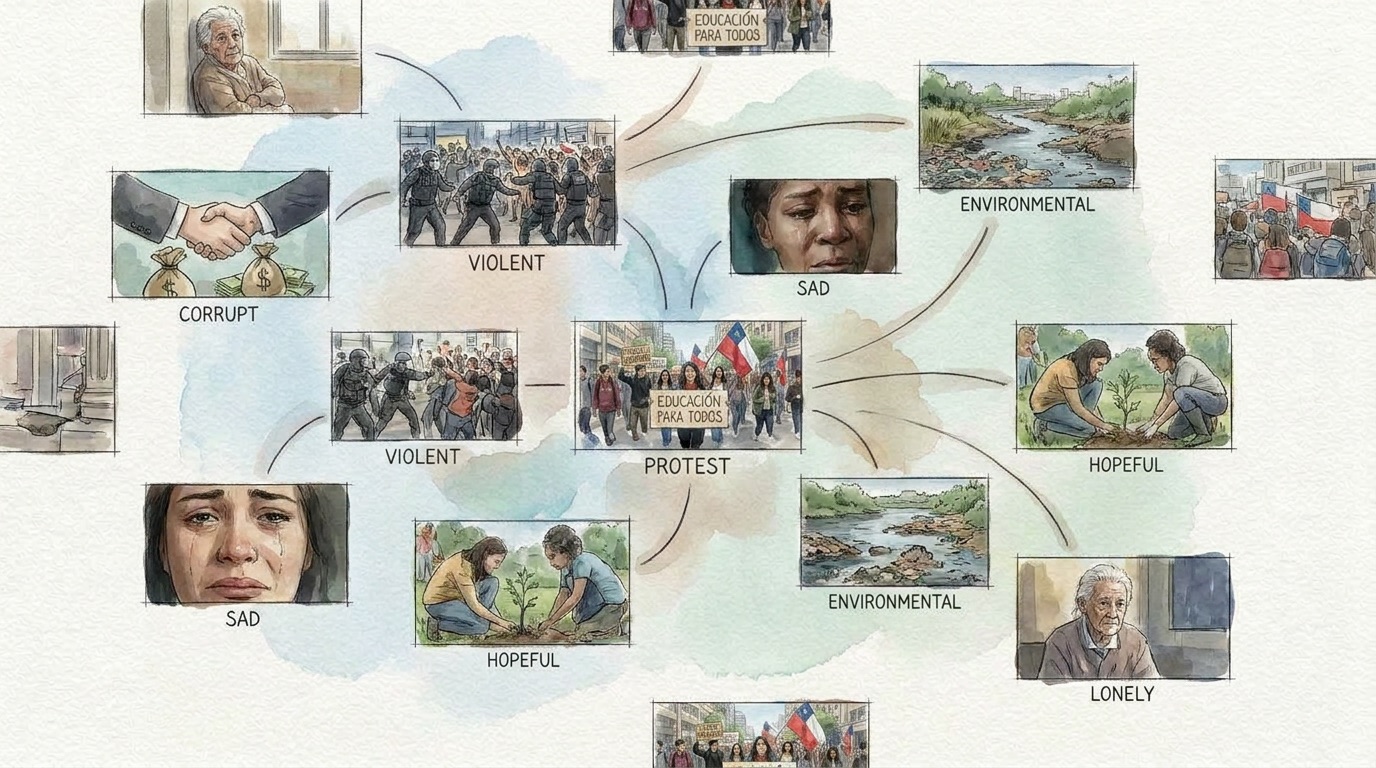
Between the screens are annotation stations. There, visitors watch a complete one-minute film while the interface asks: Is this violent? As visitors answer, softer questions follow — Is this sad? nostalgic? feminist? woke? ultra-right? Each response joins thousands of others and silently repositions every shot. Every film finds its place in a semantic space whose main axis is violence.
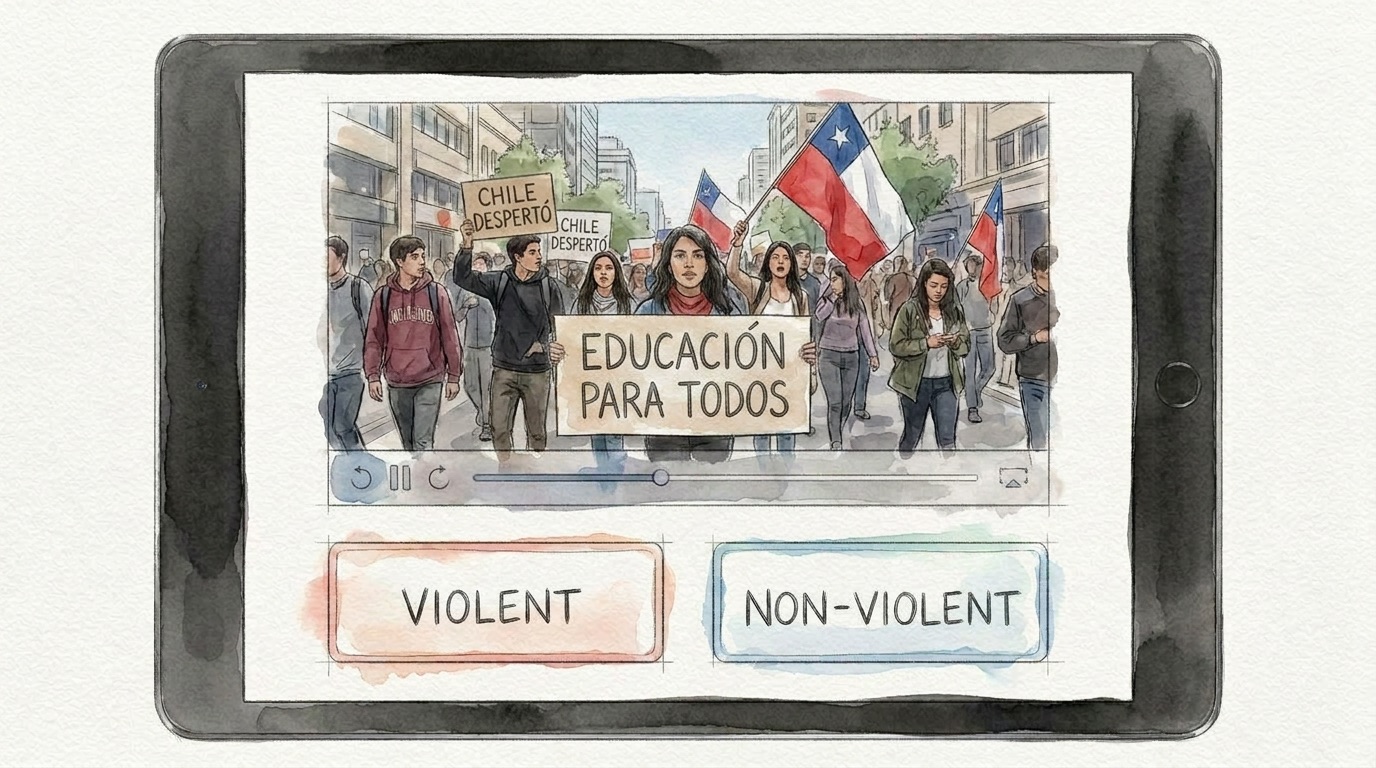
The video engines keep rendering new edits for each pole, so no sequence screened will ever repeat in the same order. With this installation, the goal is to place the audience in tension with the question of violence — feeding the archive with affective and political labels such as joy, tenderness, nationalism, or patriarchy. The algorithmic editor projects those annotations onto the screens, creating new documentary experiences.
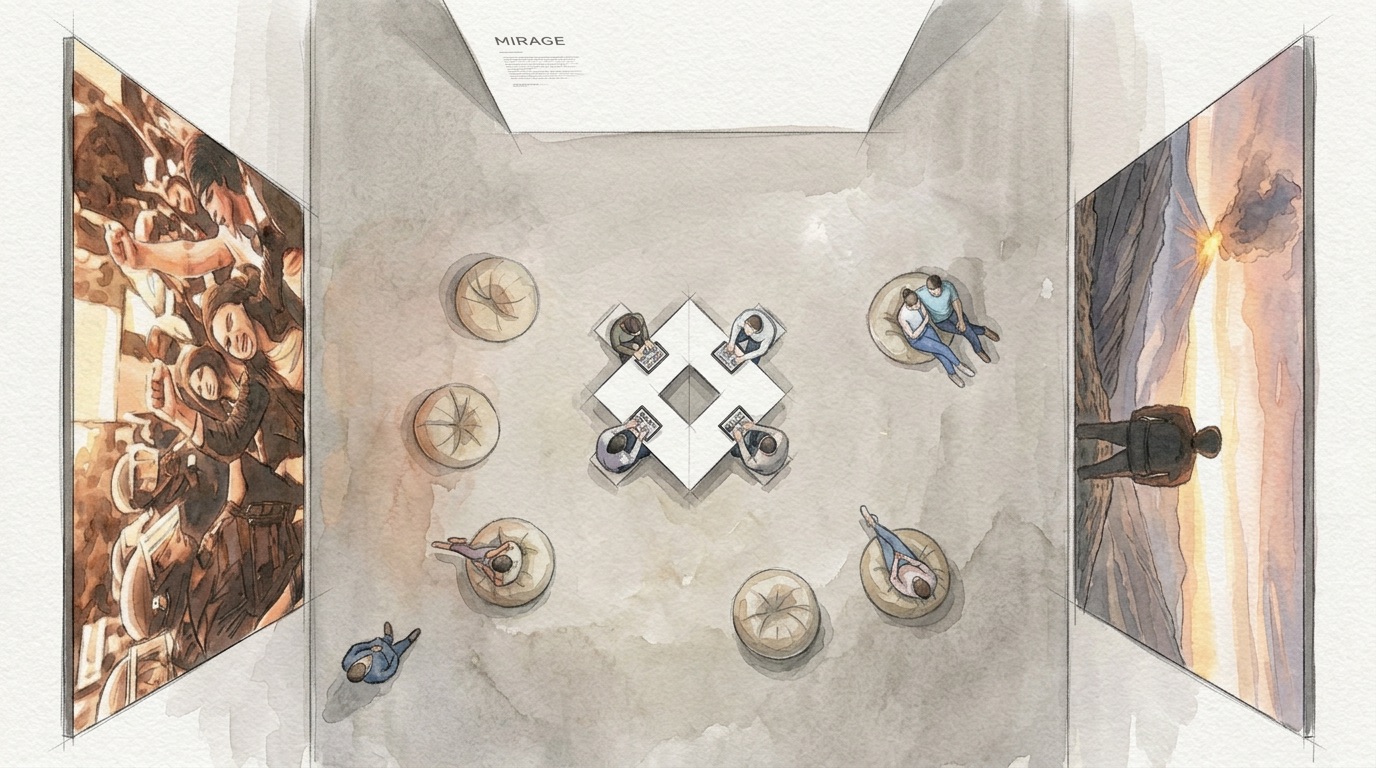
HOVER — READ THE ROOM · CLICK A SCREEN — RUN THE FEEDS
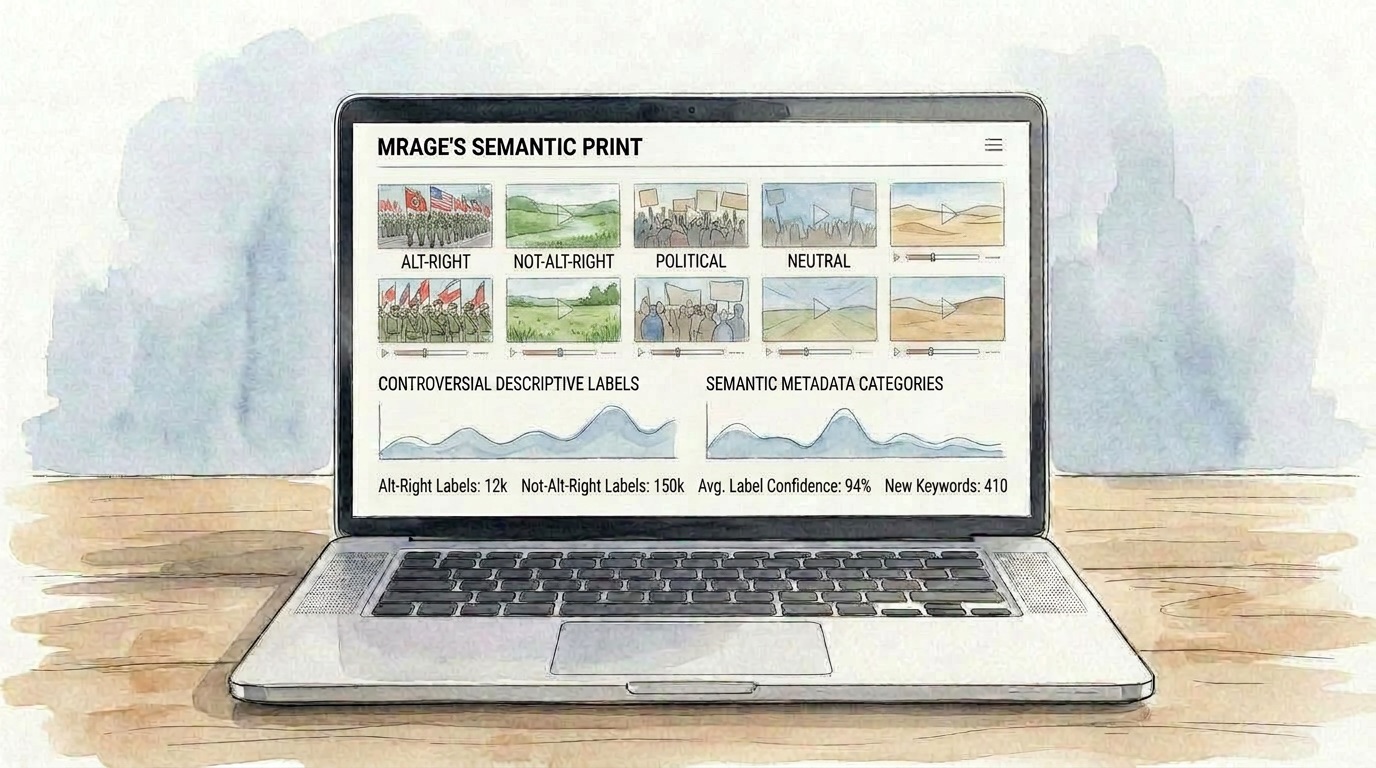
FIG. 1 — KNOWLEDGE GRAPH, LIVE SIMULATION
The demos below are the machine's first pass over the archive — explore it, then add the human layer. Every moment hangs between two poles, pulled by the strength of its machine reading. Cultural keywords and emotions act as secondary magnets: charged words that drag the same images toward different readings. Click a label to see its gravitational field. Click a moment to watch it and respond.
PROTOTYPE DATASET — MACHINE PASS 01
A working prototype built on the real archive and real AI annotations — every visualization below draws on this same dataset.
CLICK 2X TO WATCH A FILM
FIG. 2 — LATENT SPACE, 3D PROJECTION
The same 110 moments, projected into the latent space computed from their annotations (t-SNE over the archive's descriptive language). The horizontal axis is literal: the violence score assigned by the machine. Depth and height are semantic: moments that speak alike, cluster. Orbit the archive as a constellation of evidence.
DRAG — ORBIT · CTRL+SCROLL — ZOOM · CLICK — SELECT · CLICK ×2 — PLAY
FIG. 3 — THE AXIS, FLATTENED
All 110 moments stacked along the single axis the installation is built on: from what the machine found most peaceful to what it found most violent. This strip is the seed of the two screens: cut in half, each side becomes an endless film. Where should the cut fall?
FIG. 4 — ALGORITHMIC EDITING, A PROTOTYPE
In the physical installation, two screens endlessly re-edit the archive based on visitor judgements. This is a prototype of those algorithmic edits running live in the browser. Dragging the red line in Fig. 3 (The Spectrum) above sets where the archive splits into non-violent and violent streams, rendering a custom stream below. Choose a screen. Press render.
This stream is assembled from the cut in Fig. 3 above. Drag the red line to change which films feed into this screen.
THE WEB PLATFORM — AFFECTIVE ANALYTICS
There is a kind of knowledge machines cannot produce alone: the affective knowledge born when an image changes a viewer. In the installation, visitors nourish the archive with their personal judgements and political biases — while the re-edited archive nourishes them back, forming the cybernetic feedback loop at the core of Mirage.
Feeding those human responses back to the machine returns a live reading of collective perception: which scenes we flinch at, which we forgive, and how a country is reassembled through its own eyes. The website captures this continuous exchange, putting the audience's biases on screen rather than hiding them.
That human layer is initiated by the MAFI collective through co-creative workshops, and expands continuously with every visitor who engages with the installation or the online platform.
THE ONLINE ARCHIVE & INFOGRAPHICS
Mirage extends far beyond the exhibition space. Through dedicated web analytics, interactive infographics, and data visualisations, the website makes the installation's internal dynamics fully legible and open to exploration.
WHAT THE WEBSITE REVEALS
In the physical room, affective feedback is felt in real time as two screens argue across the space. On the website, that same live data becomes readable through browser analytics and infographics.
The website translates visitor judgements into interactive spectrums, knowledge graphs, and semantic prints that hold the installation's fluid data still. The Semantic Print shown here (Fig. 5) is a working analytical tool operating live on the 110 annotated moments; every user response re-ranks and reshapes its visual insights.
FIG. 5 — SEMANTIC PRINT, LIVE FROM THE PROTOTYPE
MIRAGE'S SEMANTIC PRINT
Re-rank the labels, or click one to read its slice.
CREATORS & PARTNERS
A machine could answer the question of violence for us — but that answer would mean nothing. We would rather ask people. Mirage is currently in active development as a prototype; we are seeking co-producers, production funding, and exhibition partners for a 2028 premiere.
MFA graduate from Columbia University and Assistant Professor at Pontificia Universidad Católica de Chile. Research focuses on cinema, ecology, and digital culture. Co-director of Beaverland (2014) and screenwriter for Propaganda (2014), God (2019), and Erratics (2026).
Chilean-Dutch filmmaker and artistic researcher in Amsterdam. Co-founder of MAFI collective, PhD candidate at University of Amsterdam researching digital archive interfaces, and research fellow at Netherlands Film Academy co-leading AI Greenhouse.
Executive Director of Chiledoc, producer at CangrejoFilms, and member of the MAFI collective (MAFI.tv premiered at IDFA DocLab 2012). Board member of the Chilean Film Academy and professor at Univ. of Chile. Producer of films selected at Berlinale, IDFA, and CPH:DOX.
Universidad Católica de Chile ×
Netherlands Film Academy (AI Greenhouse)
Artefacto Films (Spain)
AIxDesign (The Netherlands)